Georgian 18ct Gold and Black Opal Ring
London, 1834
A rare and striking early nineteenth century English ring in 18ct gold, clearly hallmarked for London 1834 during the reign of William IV, and a particularly fine example of its type.
At its centre sits a natural black opal cabochon measuring approximately 7 × 3 mm, displaying vivid play of colour with saturated red fire and bright flashes of green and cobalt blue. The stone shifts beautifully with movement and light, creating a lively and dramatic effect.
The opal is framed within a bold surround of black enamel and sculptural rococo goldwork in rich 18ct gold. The carving remains beautifully crisp, giving the ring an opulent presence while retaining a refined scale suitable for wear.
The reverse retains its original closed back setting and a finely engraved memorial inscription reading:
“In Memory of …”
with the date of death engraved to the inner band in 1862. Such inscriptions were characteristic of nineteenth century sentimental jewellery and add a deeply human dimension to the piece, transforming it from ornament into a small historical artefact.
Material Value and Quality
Beyond its beauty and rarity, the ring also carries meaningful intrinsic value. Weighing 3.3 grams in 18ct gold, the gold content alone represents a strong material base at current gold prices. The natural black opal has been independently assessed at £400 per carat, reflecting the quality of its colour play and vivid red and green fire. Combined with its early nineteenth century craftsmanship and London hallmark, the ring offers both aesthetic presence and enduring material worth.
Details
London hallmarks, 1834
Maker’s mark W.M
18ct gold
Natural black opal approximately 7 × 3 mm
Ring size P (UK) / approximately US 7¾
Weight 3.3 grams
Original engraved memorial inscription dated 1862
A rare and beautifully preserved piece of early nineteenth century English jewellery combining craftsmanship, symbolism and the unmistakable fire of natural black opal.
Georgian 18ct Gold and Black Opal Ring
London, 1834
A rare and striking early nineteenth century English ring in 18ct gold, clearly hallmarked for London 1834 during the reign of William IV, and a particularly fine example of its type.
At its centre sits a natural black opal cabochon measuring approximately 7 × 3 mm, displaying vivid play of colour with saturated red fire and bright flashes of green and cobalt blue. The stone shifts beautifully with movement and light, creating a lively and dramatic effect.
The opal is framed within a bold surround of black enamel and sculptural rococo goldwork in rich 18ct gold. The carving remains beautifully crisp, giving the ring an opulent presence while retaining a refined scale suitable for wear.
The reverse retains its original closed back setting and a finely engraved memorial inscription reading:
“In Memory of …”
with the date of death engraved to the inner band in 1862. Such inscriptions were characteristic of nineteenth century sentimental jewellery and add a deeply human dimension to the piece, transforming it from ornament into a small historical artefact.
Material Value and Quality
Beyond its beauty and rarity, the ring also carries meaningful intrinsic value. Weighing 3.3 grams in 18ct gold, the gold content alone represents a strong material base at current gold prices. The natural black opal has been independently assessed at £400 per carat, reflecting the quality of its colour play and vivid red and green fire. Combined with its early nineteenth century craftsmanship and London hallmark, the ring offers both aesthetic presence and enduring material worth.
Details
London hallmarks, 1834
Maker’s mark W.M
18ct gold
Natural black opal approximately 7 × 3 mm
Ring size P (UK) / approximately US 7¾
Weight 3.3 grams
Original engraved memorial inscription dated 1862
A rare and beautifully preserved piece of early nineteenth century English jewellery combining craftsmanship, symbolism and the unmistakable fire of natural black opal.

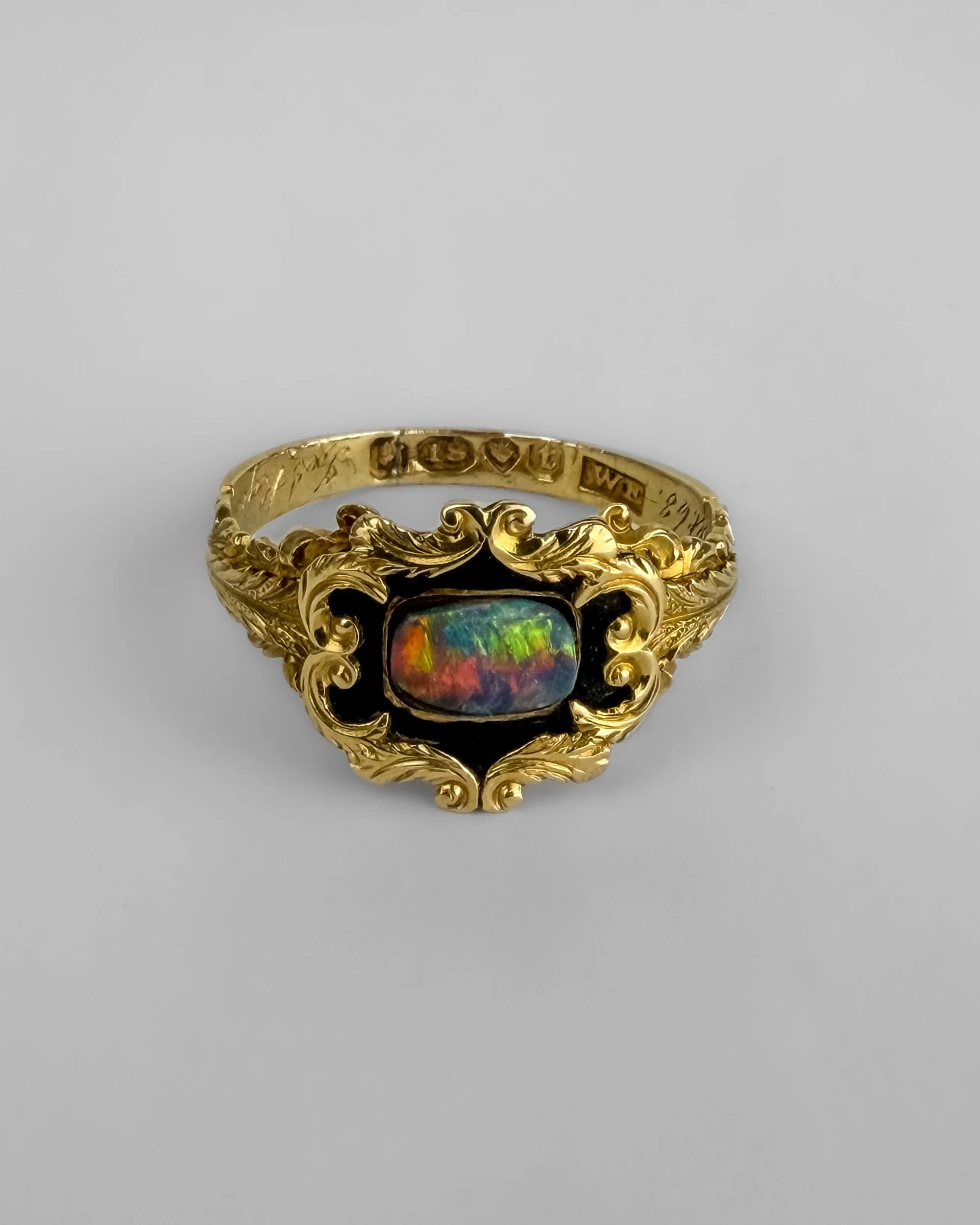 Image 1 of 6
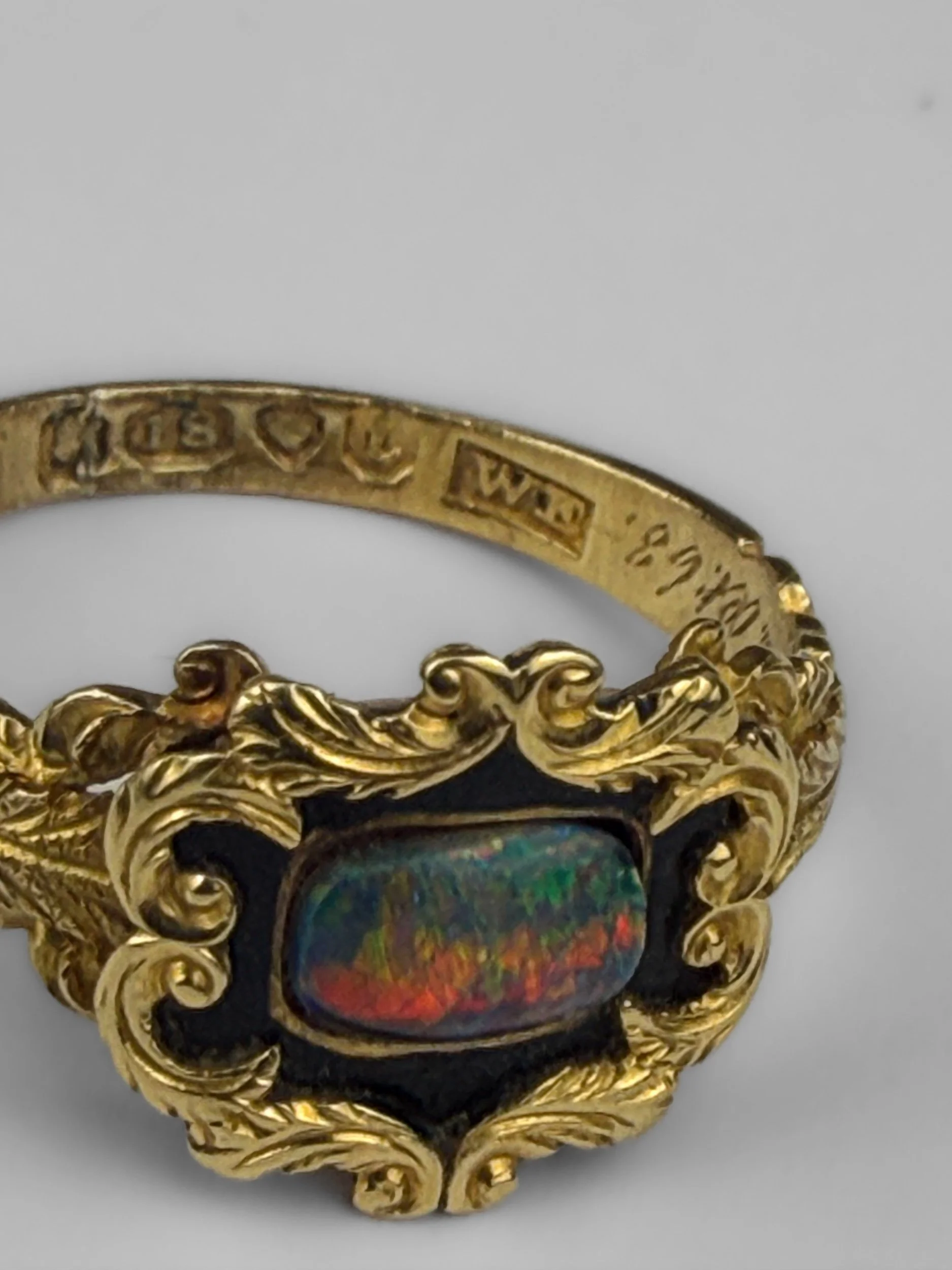 Image 2 of 6
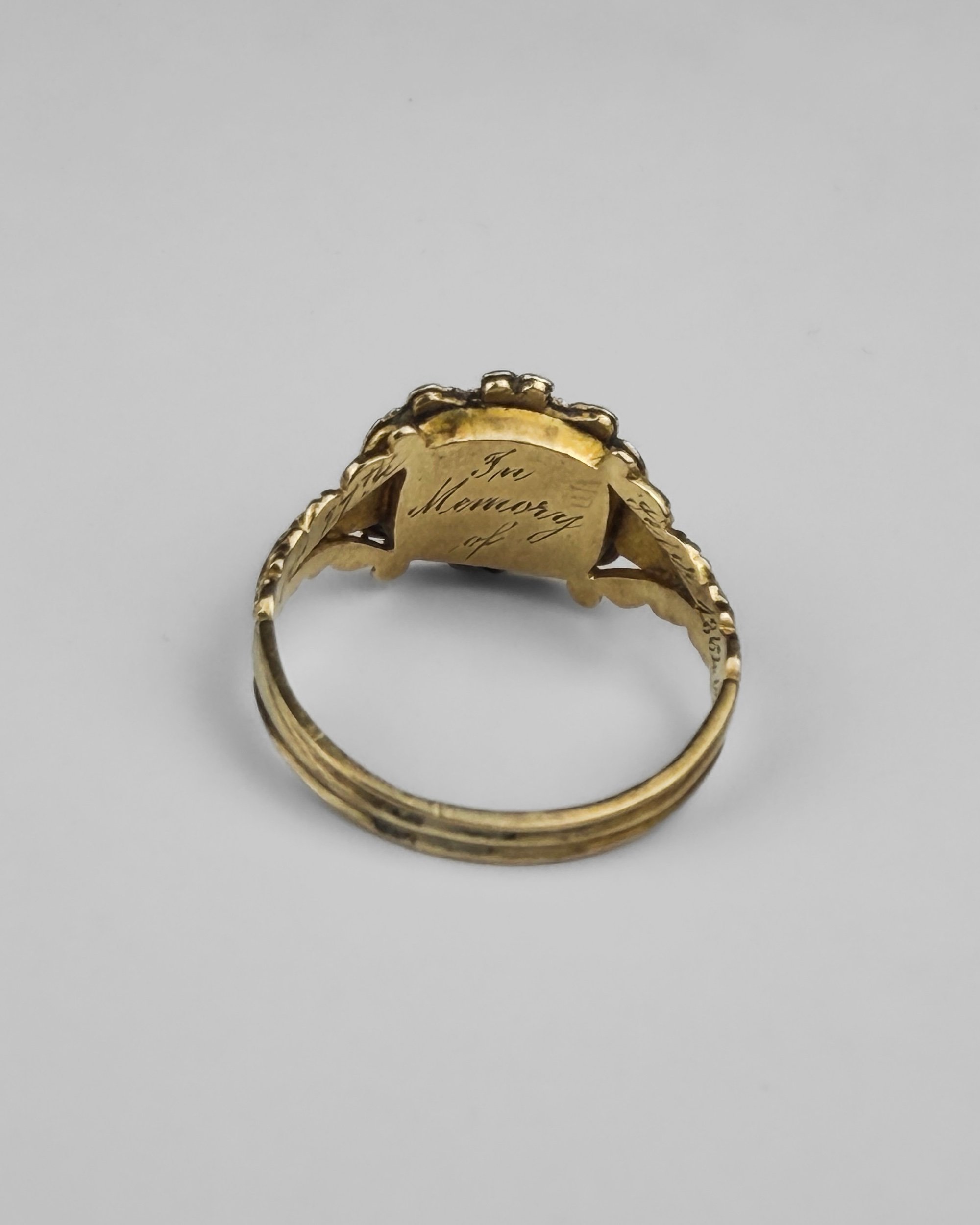 Image 3 of 6
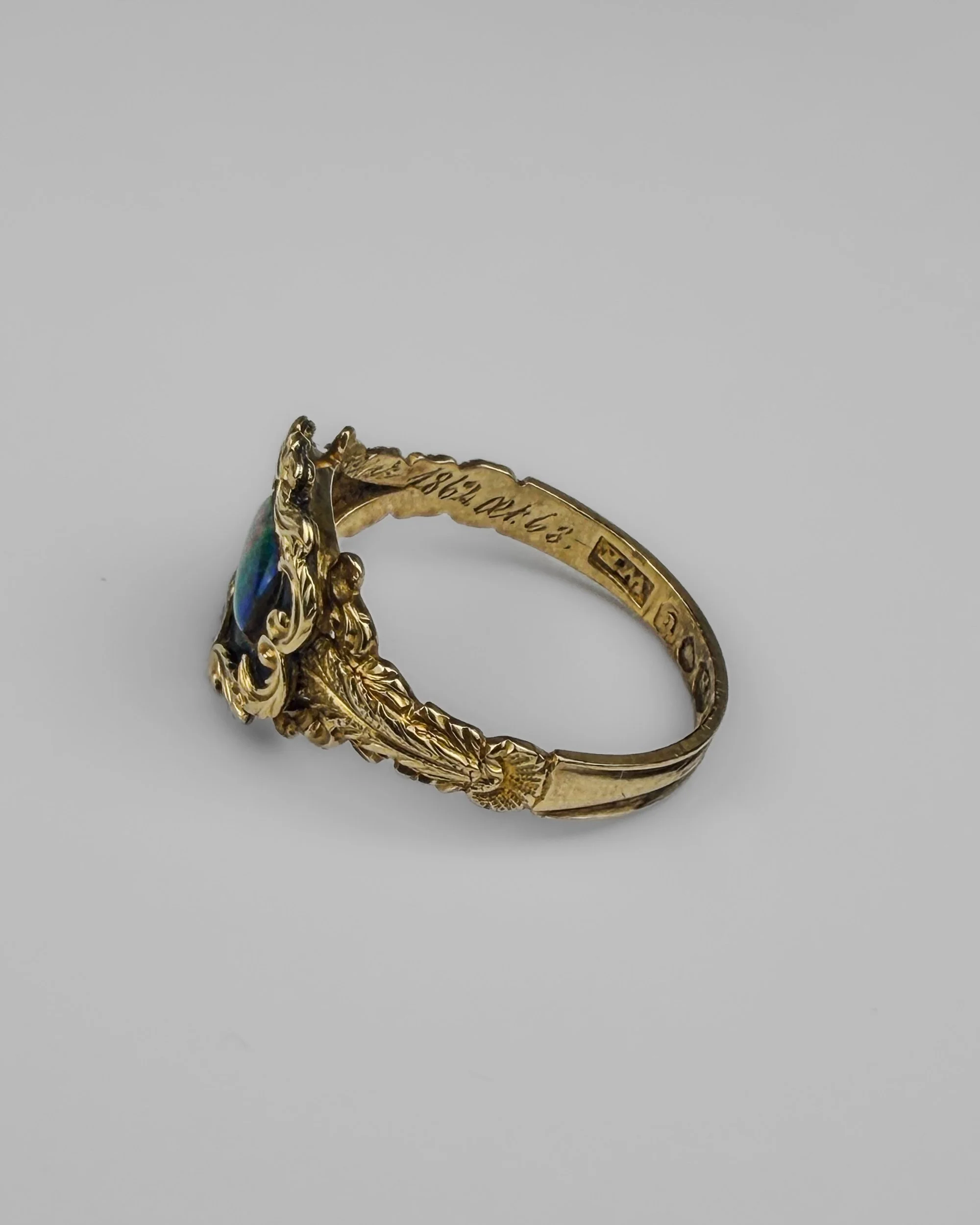 Image 4 of 6
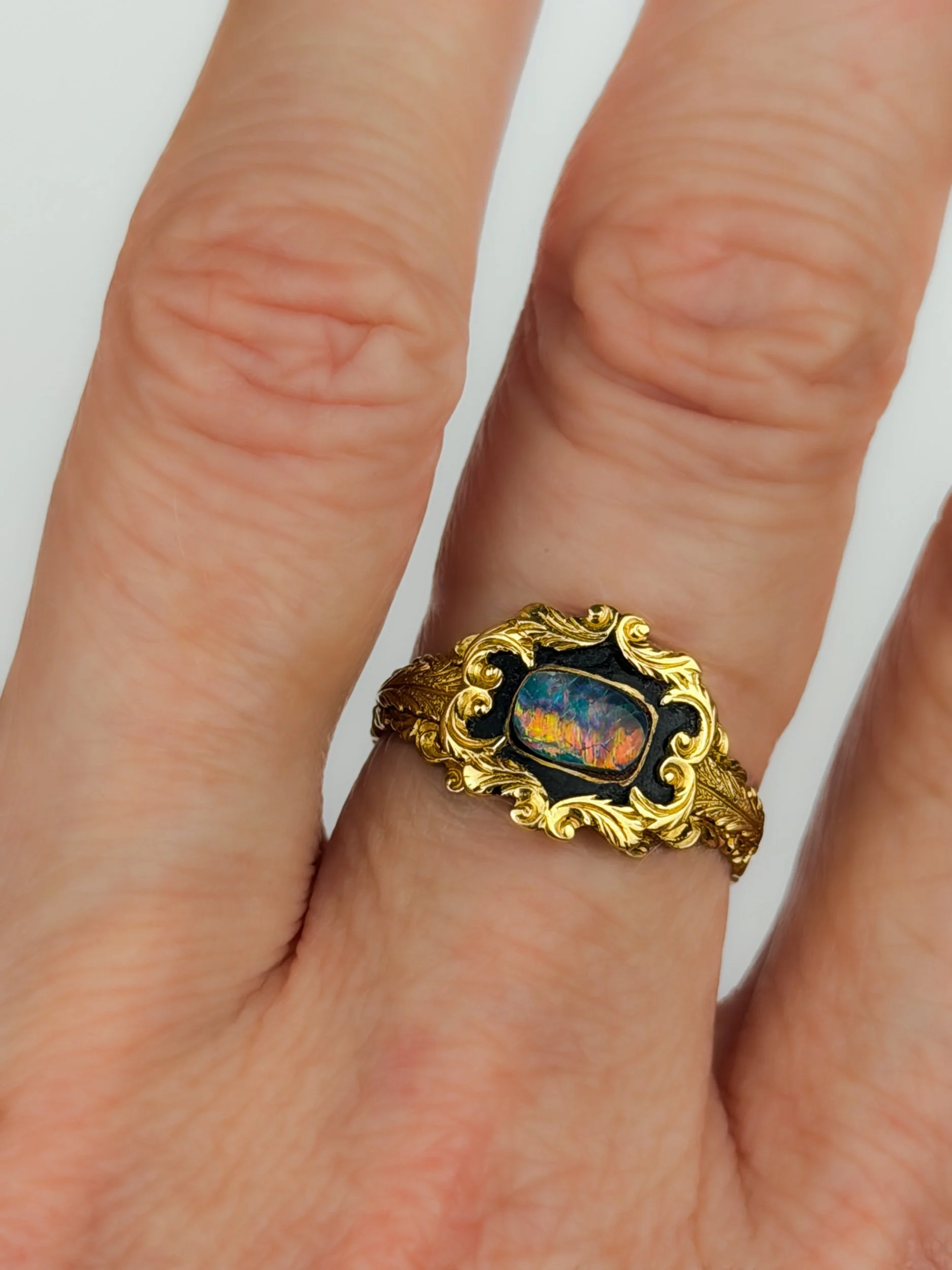 Image 5 of 6
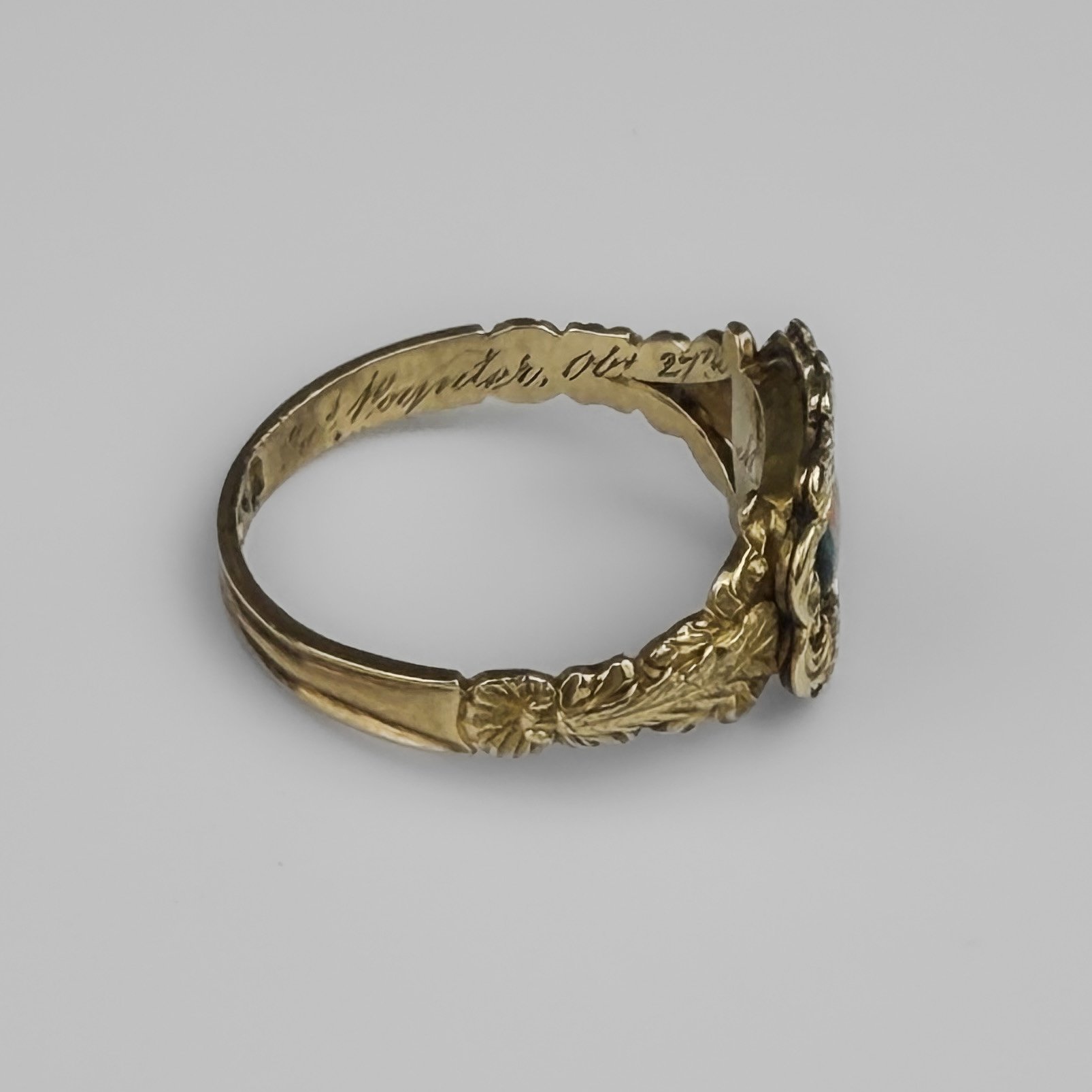 Image 6 of 6