
 Image 1 of 2
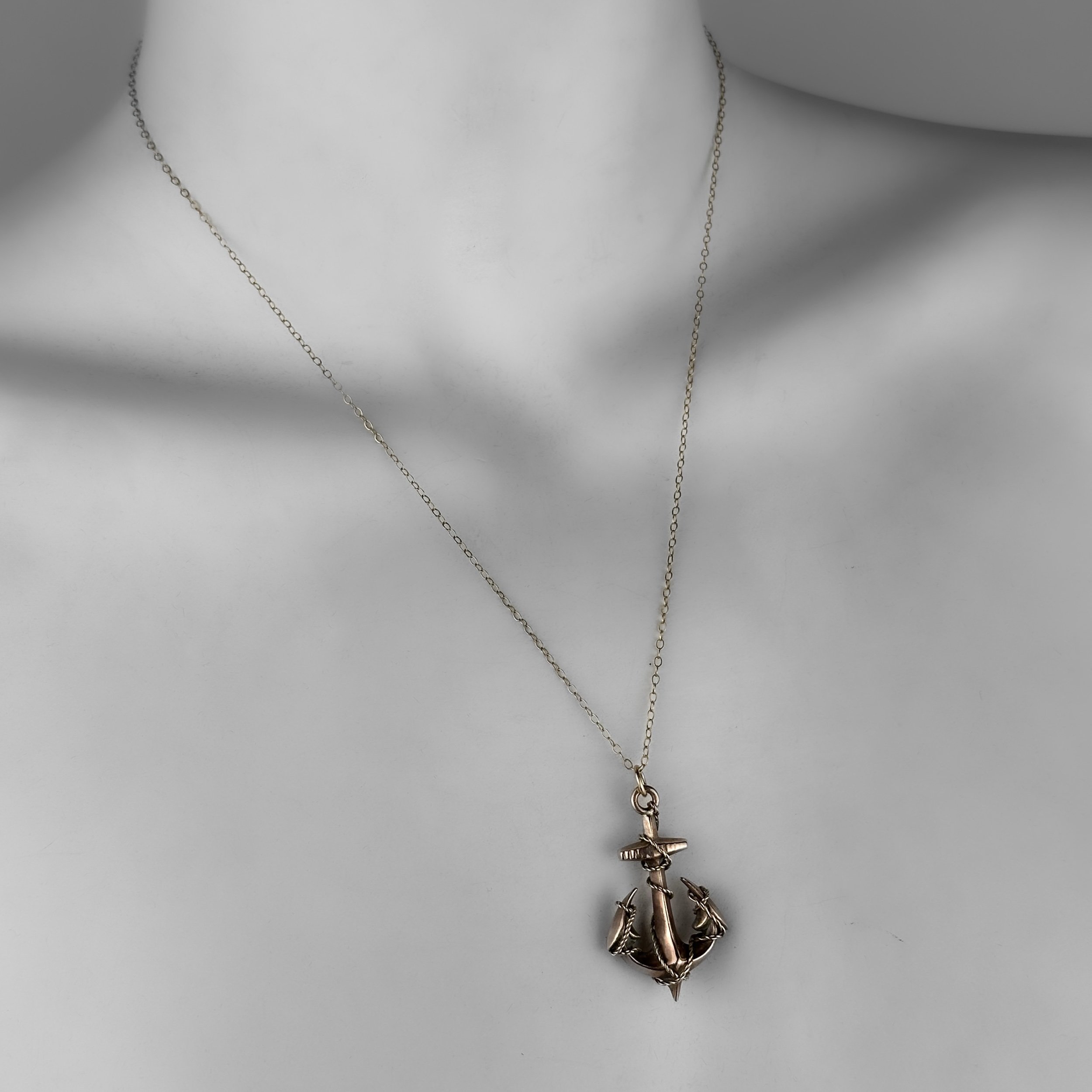 Image 2 of 2
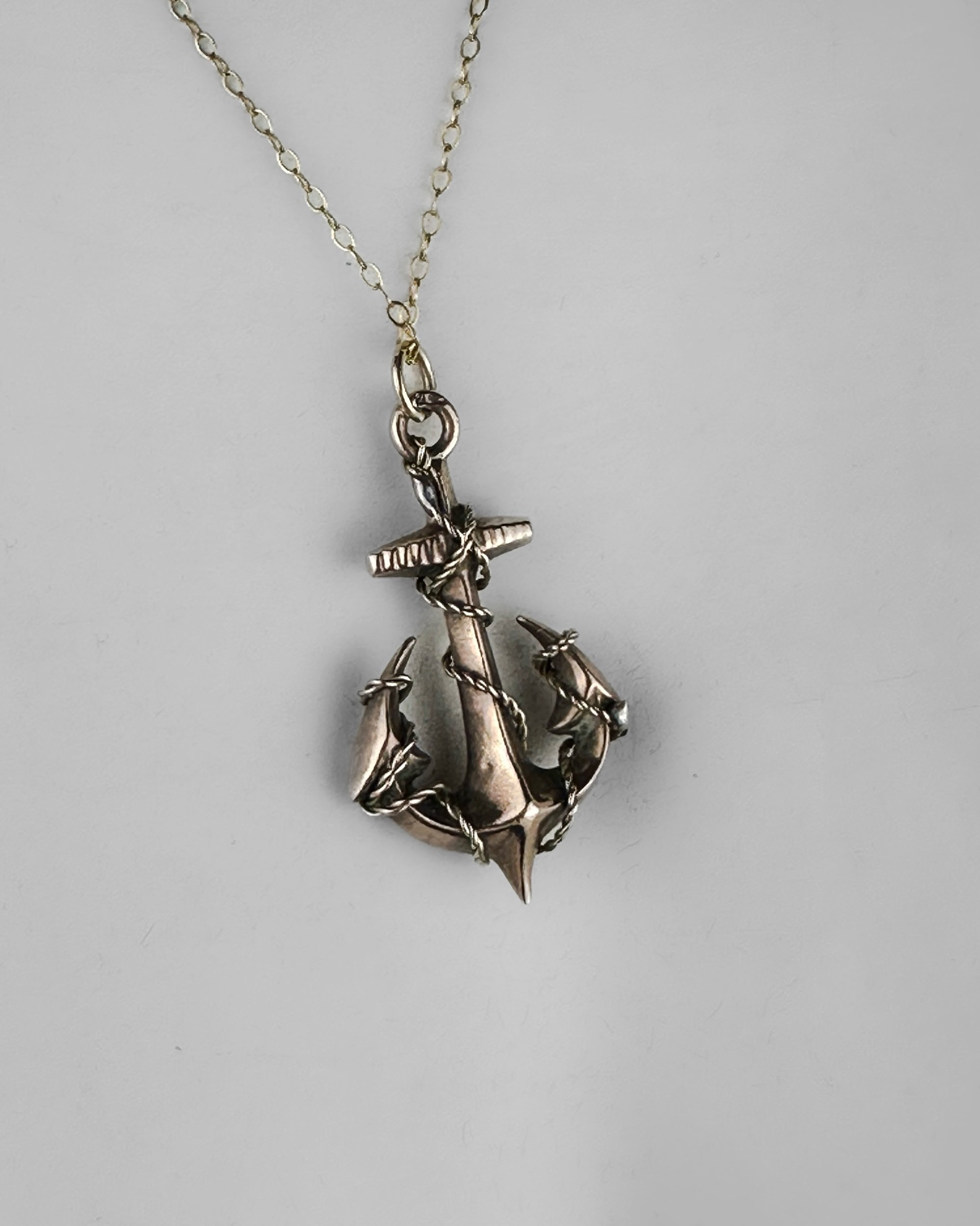
An evocative antique anchor pendant in 9 carat gold, weighing 2.2 grams, this piece is a beautiful example of the enduring dialogue between maritime symbolism and personal adornment in late Victorian and Edwardian jewellery.
This is a a particularly finely modelled example with confident proportion and notable detail: a tapered shank, pronounced flukes, and a crossbar bound with delicately modelled rope. The surface bears a beautiful patina, consistent with a piece that has been worn and treasured.
Historical Context
In the 19th century, the anchor was among the most resonant symbolic forms in jewellery. Its origins reach back to Classical antiquity, where it denoted safety and secure harbour, but by the Victorian era it had accrued layered meanings. Anchors were widely exchanged as tokens of constancy, hope, and lasting love, particularly within maritime nations such as Britain. They were also closely associated with seafaring life - often worn by sailors, their families, or as mementos during long voyages and periods of separation.
Within Christian iconography, the anchor functioned as a discreet emblem of faith and spiritual hope (derived from Hebrews 6:19: “Which hope we have as an anchor of the soul”), a meaning that subtly informed much Victorian symbolic jewellery even when worn secularly.
Symbolism
Hope and Stability – a promise of grounding amid uncertainty
Fidelity and Constancy – unwavering attachment and trust
Safe Return – protection for those at sea and those who wait
Details
Material: Solid 9ct gold
Weight: 2.2 grams
Period: Antique, late 19th–early 20th century
Condition: Very good antique condition, with age-appropriate patina.
Comes on a 45cm 14 ct gold-filled chain.
An evocative antique anchor pendant in 9 carat gold, weighing 2.2 grams, this piece is a beautiful example of the enduring dialogue between maritime symbolism and personal adornment in late Victorian and Edwardian jewellery.
This is a a particularly finely modelled example with confident proportion and notable detail: a tapered shank, pronounced flukes, and a crossbar bound with delicately modelled rope. The surface bears a beautiful patina, consistent with a piece that has been worn and treasured.
Historical Context
In the 19th century, the anchor was among the most resonant symbolic forms in jewellery. Its origins reach back to Classical antiquity, where it denoted safety and secure harbour, but by the Victorian era it had accrued layered meanings. Anchors were widely exchanged as tokens of constancy, hope, and lasting love, particularly within maritime nations such as Britain. They were also closely associated with seafaring life - often worn by sailors, their families, or as mementos during long voyages and periods of separation.
Within Christian iconography, the anchor functioned as a discreet emblem of faith and spiritual hope (derived from Hebrews 6:19: “Which hope we have as an anchor of the soul”), a meaning that subtly informed much Victorian symbolic jewellery even when worn secularly.
Symbolism
Hope and Stability – a promise of grounding amid uncertainty
Fidelity and Constancy – unwavering attachment and trust
Safe Return – protection for those at sea and those who wait
Details
Material: Solid 9ct gold
Weight: 2.2 grams
Period: Antique, late 19th–early 20th century
Condition: Very good antique condition, with age-appropriate patina.
Comes on a 45cm 14 ct gold-filled chain.